

David Stanley
2026 Tour de France Week Three:
25 Takeaways from the 2026 Tour de France
David Stanley is an experienced cycling writer. His work has appeared in Velo, Velo-news.com, Road, Peloton, and the late, lamented Bicycle Guide (my favorite all-time cycling magazine). Here's his Facebook page. He is also a highly regarded voice artist with many audiobooks to his credit, including McGann Publishing's The Story of the Tour de France and Cycling Heroes.
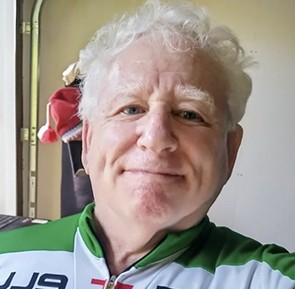
David L. Stanley
 David L. Stanley's masterful telling of his bout with skin cancer Melanoma: It Started with a Freckle is available in print, Kindle eBook and audiobook versions, just click on the Amazon link on the right.
David L. Stanley writes:
An Unexpurgated Stream-of-Consciousness: 25 Takeaways in 4400 words from the Tour de France, 2026.
Generally, for these pieces, I take notes as the Tour unrolls, and try to place the items in rational, linear order. For this piece, written Sunday evening, I threw all that out the window. I sat down at the laptop after dinner, and rambled on about the things that were uppermost in my mind. Minimal editing, get the words onto the page. Thanks for reading. Dstan58
1) MvdP and Tadej going on the attack for the final stage win with MvdP holding off the pack, which included his teammate Jasper Philipsen, is the finish we all deserved, the finish that MvdP deserved, in one of the most gloriously ridden Tours de France in my lifetime. This finish ranks, tied at the top, with Greg LeMond’s 1989 win in the final day’s time-trial for last day in Paris heroics. Greg’s victory had an extra-ordinary backstory: he was Our Greg, the All-American kid who nearly died in a hunting accident, the American who took on those snobby-ass Euro-pros at their own game and kicked their collective asses.
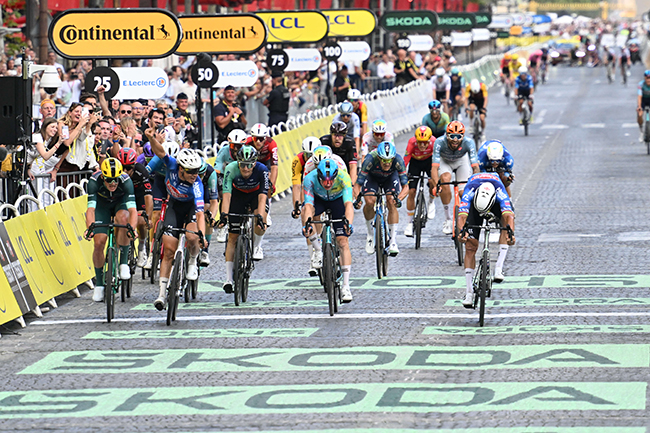
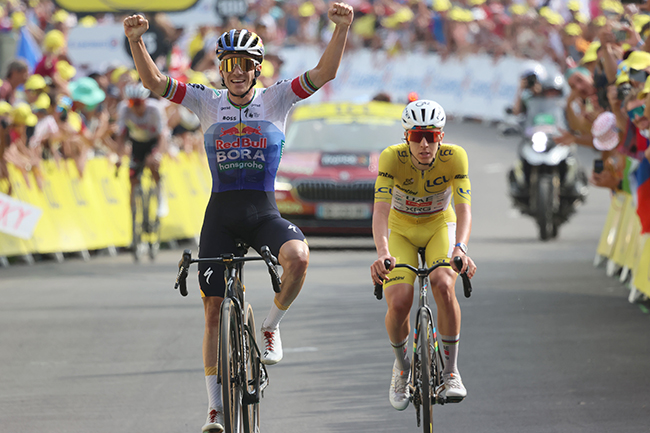
Mathieu van der Poel wins stage 21.
We watched Greg and family as the watched the clock count down. It was an amazing moment in sports, the Wide World of Sports, and you did not have to know a goddamn thing about cycling to cheer and appreciate the meaning of the moment. Today’s victory had a similar trope—the drama of first, two superstars, and then, only one, who joined forces to take down the entire desperate peloton. MvdP’s win against 45 men as they sprinted down the bricks at 45 mph as MvdP died a thousand times to hold 42 mph in front of them—you did not need to be a cycling fan, you just needed to understand the human drama of athletic competition. Greg and MvdP: equally extraordinary, different circumstances; I was fortunate enough to see them both via television.

Here's LeMond time trialing in the fourth stage of the 1989 Tour de France. Sirotti photo
2) Christian Prudhomme said “all sports have cheating; in life, in politics, in business, cheating is everywhere. The only thing is that question is pretty much only posed in cycling or in athletics a bit, it’s not brought up in the big sports. There is no perfect world.”
This was the single most asinine and self-serving comment at the close of an athletic event that I’ve ever heard. It sounds exactly like what I heard as a teacher, “Well, Mr. Stanley, everybody used ChatGPT to write that essay. So, yeah, I’m not really cheating. And why don’t you go after everyone else? This isn’t fair!” Yes, Christian. Cheating is everywhere. But for you to toss that out such a lame excuse, as the showrunner of the world’s greatest annual sporting event, tells us everything we need to know. Here, let me fix it: “all sports have cheating; in life, in politics, in business, cheating is everywhere. We know this, and within the Tour, we do everything we can to acknowledge it, root it out, to deal with it openly and fairly. That is our charge, what we as the greatest race in the world must continue to do make sure our race is run as cleanly as science permits.” Now, I only read what Velo Magazine allowed me to read. It is possible that he said more. I could be wrong here.
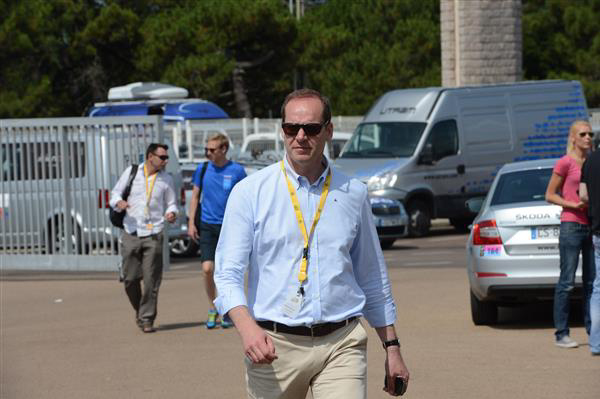
Christian Prudhomme
3) Since this is stream of consciousness, and Christian Prudhomme brought it up, here we go. I am 100% ready to admit that the Tour is filled with dopers.
• Microdosing for EPO is shown in many studies to be effective in many, but not all, individuals. The testing window is very small, just hours. The gains are also small. But at the highest end of sport, the tiniest of gains are meaningful.
• Scholarly research indicates that “microdosing testosterone is not an effective performance-enhancing drug (PED) for building significant muscle mass or strength, primarily because the doses are too low to maintain the supraphysiological levels needed for acute athletic enhancement. However, microdosing is highly effective at speeding up recovery and is exceedingly difficult for anti-doping authorities to detect.”
• A landmark meta-analysis published in the Annals of Internal Medicine evaluated HGH use in fit, young athletes and found that despite an increase in lean body mass, there was no measurable improvement in exercise capacity, maximal oxygen uptake, or muscle strength.
• AMP analogs. AICAR is an analog of AMP (adenosine monophosphate) that activates AMP-activated protein kinase, AMPK. This is an essential enzyme regulating cellular energy homeostasis and metabolism. It is important to energy regulation as it stimulates glucose uptake and fatty acid oxidation in skeletal muscle. It is also vital to mitochondrial biogenesis. The mighty mitochondria, you remember from Bio 9, is the “powerhouse of the cell.” This product assists in the creation of new mitochondria. It is banned for athletes by all the national and international bodies I checked with. Why is this product particularly devastating to clean sport? I going to draw a broad analogy here; bear with me. Our bodies also produce these compounds. Much like the early days of EPO, anti doping labs have a tough time in telling the endogenous from the exogenous. Yes, they can test for exogenous AICAR, but it’s sketchy, and that’s part of why WADA banned it. The hard problem isn’t a total inability to test; it’s sensitivity, designer variants, and proof of intent. In short, it’s very difficult to test from we produce naturally from what is supplemented from without. AMPK is a nightmare for WADA.
• I’ve provided citations at the end of this piece.
4) Then, what’s my point? We can’t surrender to cynicism, and we can’t pretend the past didn’t happen. Cycling’s history demands suspicion. Not because every rider is guilty, but because the sport taught us to be wary. Extraordinary performances deserve scrutiny. Testing should be relentless. Questions should be asked. Still, suspicion is not license for slander. We can hold two truths at once.
1) Some riders are doping.
2) We have no fucking clue who the dopers are.
Until I see hard, sustainable, gold-standard science-based evidence, I’m not the guy who will weaponize rumor, speed, wattage charts, or listen to the armchair cycling fan who had a semester of HS physics and once entered a Category 5 industrial park criterium who thinks a fast ascent equals a syringe. My point is moral: Skepticism is absolutely justified. But with zero evidence, I will never accuse any rider: Tadej, Tim Merlier, or Lanterne Rouge Cees Bol who finished 6:22:08 behind Tadej, of anything. We have to trust WADA’s science, imperfect as it is, and insist that evidence, not a vibe, is the threshold for calling someone a cheat.
5) How hard was this year’s Tour de France? Pretty damned hard. Let’s look first at the time trial. The men we tout as the TT specialists took a whacking. You have to go down to 8th place on the day to find the “specialists.” We have: 8) Armirail@1:55. 9) Castrillo@2:00. 10) Tarling@2:02. 11) Ganna@2:11. The fastest men were so beat up as they rode selflessly across the flats at 30+mph and grupetto-ed it up the climbs that the top seven stage places all went to guys high in the GC. Let me pose a question. Cycling historians regard Maitre Jacques “Monsieur Chrono” Anquetil (did I shoehorn enough old nicknames in there?) as the finest of all TT riders. Maybe, but where does Remco Evenepoel slot in? I’m going to enrage the old timers, and say that Remco is the equal of Jacques. Full stop.

Jacques Anquetil passes Charly Gaul in the 1960 Giro d'Italia stage 16 time trial. Sirotti photo







Content continues below the ads
6) Indeed, this year’s Tour may have been the hardest Tour in history. The weather was often beyond brutal. Most of us, when the temp tops 90/32 head inside as we find even pruning the hedges, if you know what I mean, to be too draining. Not many of us go out to race the bike at 30+ mph for 5 hours. Josh Tarling said to renowned journo Alisdair Fotheringham after the first L’Alpe d’Huez stage, "What really surprised me was the speed on the flats here. The climbing is the climbing, but on the flat here we’ve been going 70." On the flats. 43 mph. For an hour or more. I’ll let that sink in.
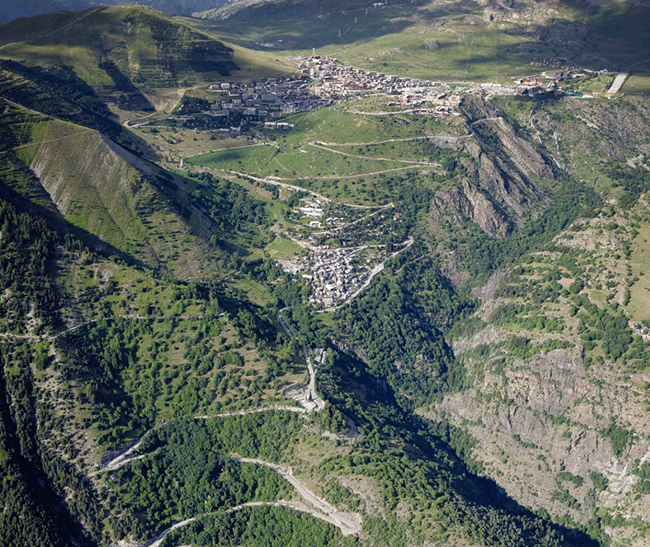
The l'Alpe d'Huez switchbacks.
7) Let’s talk Remco. Conventional wisdom, which isn’t really wisdom but a series of stories, most apocryphal, says that you need to race your bike in lesser races in order to be fit enough to compete in the greater races. Perhaps that was true 50 years ago. Racing was not as difficult in those days. Often, the first 1-2 hours were raced piano, softly, and it wasn’t until late in the stages or when the TV choppers soared overhead that the peloton began to race in earnest.
The daily toll was not nearly so great; the cumulative effects of a grand tour not so debilitating. But in the modern world, where everything that surrounds a top rider is balanced and nuanced to the microgram and millisecond, it’s no longer true. Look at Remco. His last race before the start of the Tour was Liege–Bastogne–Liege, April 26. Second place, 6:26 back of Tadej? Not too shabby. As I have said before, where Dan Bigham goes, novel thoughts coupled with excellence follows.
Remco Evenepoel wins stage 15 ahead of Tadej Pogacar. Sirotti photo
8) Brandon McNulty, Quintin Hermans, Xander Meurisse. All struck by vehicles while not out on the race course. In the midst of the biggest annual sporting event in the world, ASO and UCI cannot protect their riders, cannot provide a safe, secure area from both race vehicles and fan vehicles that somehow invaded the pitch, how much chance do any of us have on the road?
Brandon McNulty racing up the Les Angles climb in stage three. Sirotti photo
9) The Fans. I love the fans: the passion, the madness for sport. I hate the fans, their desire to make contact with the athletes who are already balanced right on the edge of disaster. The flares. The drunks. The social media crazed asshats who have to put themselves into every possible situation. It’s horrendous and if it is not curbed immediately, a fatality will ensue. I was in college at MSU, Monday, December 3, 1979. It was Finals Week. The Who were playing in Cincinnati. They were several hours late, they were doing their soundcheck, some ushers at the doors panicked at the music, and unlocked a few doors. Thousands of people crushed into the stadium through what they thought were the only open doors for the show which was not going to start for another 90 minutes. 11 fans died. 26 were seriously injured. When that news rocketed through the crowded grill where I was taking a study break (pre-internet, remember), the room went totally silent. We were devastated. That’s going to happen on the Alpe. I don’t know in what form this tragedy will occur. I do know that it is going to happen. And at that point, the ASO and UCI will wave their hands and say, “Gee, if only we could see this coming. This kind of behavior is present at all sorts of big events (looking at you, C. Prudhomme). Let’s form a committee to study the problem.
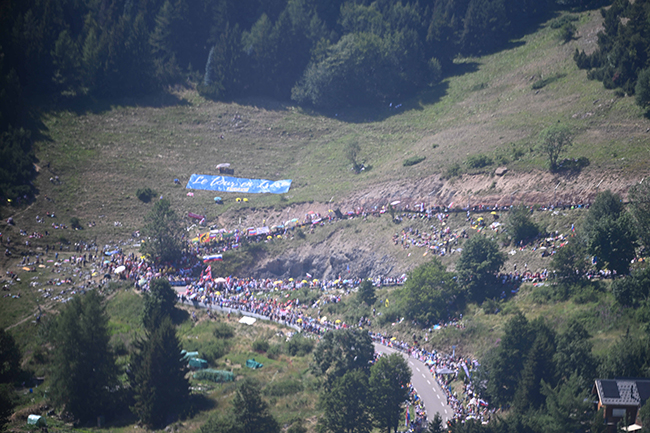
Fans on the l'Alpe d'Huez. Sirotti photo
“In the meantime, let’s focus on athletes and public urination. Where do we have these people pee? Hugo Page, in the breakaway on Stage 17, had to pee. So he did. After carefully choosing a low spectator volume area. And he was fined CHF$500 for the choice. I’m glad his socks were the proper height. I joke, a little, but urination is a problem. The Tour is now full-gas from Kilometer ZERO until the end. No more piano piano piano for the first 60 or 70 km when the men had time to leisurely take their ease. There is no time for a leisurely nature break 90 minutes down the road in the Le Tour Moderne. You go when you can where you can and observers be damned. And suffer the wrath of the UCI for “unseemly or inappropriate behavior (urinating in public during the race) and damaging the image of the sport.”
Sepp Kuss was nailed with an equal idiocy for a different infraction. Sepp, you recall, made a daring bolt for victory near the summit of stage 20. He crashed, and then crashed again a few kms later, this time into a well-placed net that saved him from plummeting into air below the switchback.
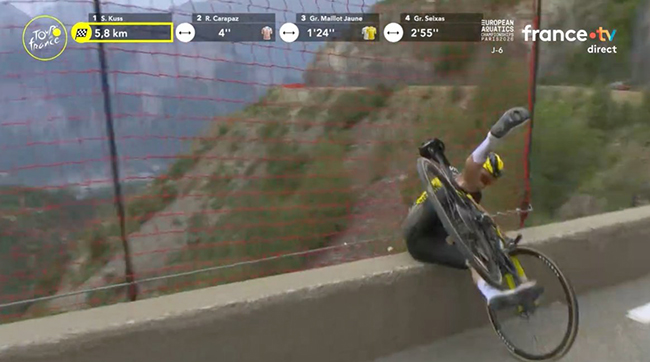
Sepp Kuss' second crash, saved by the safety net.
Shortly after, he pitched his bottle aside. But not, it should be noted, in an approved eco-area. Kuss was hit with $1800 CHF fine for littering. Now, I was one of the first and loudest to support the green area for bottle and gel foil disposal. But the commissaires have leeway. One rider, pitching a bottle as he stages a desperate chance for victory is hardly the same thing as dozens of riders who unload 50 empty bottles and 100 foils from their gels, is it? It is not. Back to the crowds.
10) The Einar Rubio near-disaster was inevitable. I’ve been a Tour-watcher since I did my first criterium races in Michigan, 1980. Yes, the fans on the climbs have always been too close. But what we saw on the Alpe this year defied all reasonable humanity. No other sport allows this insanity.
Ladies and gentlemen, welcome back after the first half hydration break. And here's comes the service from the wing, Lamine Yamal settles the ball cleanly in the midst of 300 screaming fans, he turns, Argentine Goalkeeper Dibu pushes his way through a mob scene in the goal mouth to get ready for the shot.... Yamal is stripped of the ball by a fan anxious to grab his jersey. Dibu is grabbing fans by the handful to throw them out of his way in a desperate attempt at clear vision as Yamal somehow wins the ball back. Does any other sport allow this? That’s a no.
When Einar slammed into the back of the car, he was lucky. A few inches the other way, his head slams into the rear pillar and he breaks his neck. The fan was lucky. He was as close to being run over as one can possibly be. I have read several accounts, seen the video too many times, heard an awful lot of hearsay. I read on Cyclingnews that it was the actuation of the automatic emergency braking that brought the car to such a quick stop. The driver had nothing to do with it.
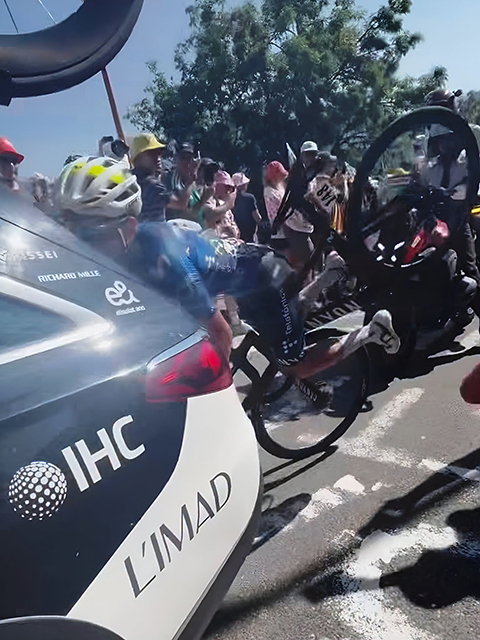
Einer Rubio crashes into the back of the UAE Team Emirates car.
A UAE team official was quoted as saying that if they were driving older vehicles without the emergency automatic braking system, the accident would not have happened. By which I suppose they mean, Einar wouldn't have gone into the rear window. No mention of what might have happened to the spectator who triggered the braking system. I also heard from someone with experience driving in the Euro peloton that they generally deactivate the braking system in the madness of the mountains. We have no idea if that so in this circumstance. Said the UAE Team Manager, “If we had had older cars, the accident would not have happened.” By older, he meant vehicles pre-2020, or so, when most makers began to include Automatic Emergency Braking systems.
We need security. One lead moto with a passenger waving a little red paddle around is not gonna get it done. Maybe we need two motos, double front-wheels just 10 meters in front, and aerodynamic edge be damned. But I am certain we need physical barriers to protect the riders, protect the fans, and ensure fair play. I DM’ed with a UK-based friend who happens to be in the scaffold and construction barricade business. I didn’t fact check his data. Feel free to do so if your life has so little meaning. “Eighty kilometres of fencing—including rental, delivery, installation, and removal—would cost no more than €400,000 per day. Given the number of spectators, they could charge a symbolic entrance fee of €1 per visitor and fence off the entire 40-kilometre route on both sides of the road, with enough money left over to buy beer for the workers. It is simply NOT TRUE that it cannot be done. Pro-City is French-based manufacturer of crowd control barriers. I bet they’d love to be the official supplier for rider safety on L’Alpe d’Huez.”
Simultaneously, Tour de France organizer Prudhomme defends Alpe d'Huez crowd control. Perhaps you see mobs of drunken screaming fans who block the road, destroy the riders’ rhythm, and otherwise interfere with the fairness of the race as an exciting and colorful scene with links to the past, I see a dangerous travesty and a tragedy waiting to happen, a sport stuck in the traditions of the past. On stage 20, in the environmental area, the riders could compete in peace, and it was still exciting, fair and safe.
The Rubio Moment: It was a horrible moment. It should be a massive wake-up call. But I am doubtful. If the UCI and ASO don't address the mania and come up with a means to control those moments, it won't be long before the ultimate horrible moment occurs. And sadly, it will.
Content continues below the ads

11) Let’s talk glory. Mads Pederson is glorious in green. Rarely has there been such a deserving winner. He won big point sprints on the flats, he got in breaks and won points, he managed to get over the big mountains and win points. He was not merely the most consistent points getter, he was not merely one of the fastest men, he was one of the most complete riders in this year’s Tour. I heard that Mads earned at least one point in every intermediate sprint on offer. (Feel free to fact check. I could be wrong.) In doing this, he joined several elite clubs. First of all, he is one of only 116 men to have won stages in all three Grand Tours. It is estimated that since its inception, between 5,500 to 8,500 different men have entered the Tour. That’s fast and rare company. More notably, he is one of only 6 men to have won the points jersey in all three Grand Tours. Eddy Merckx, Laurent Jalabert, Djamolidine Abdoujaparov, Alessandro Petacchi, Mark Cavendish, and Mads Pedersen (per Domestique Cycling.) That’s a group of riders who are truly Hors Categorie.
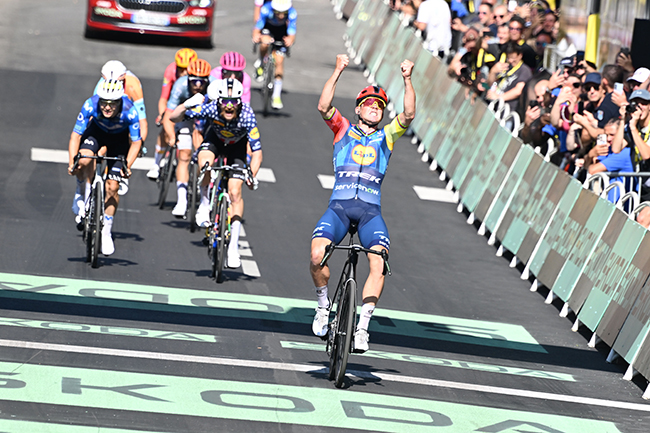
Mads Pedersen wins stage four.
12) Richard Carapaz is the new Angel of the Mountains. Yes, Charly Gaul, we remember you. We still revere your exploits. And let’s bring back a 65-year-old moniker. Richie’s Week-3 exploits are the stuff upon which the Legends of the Tour are built. While we are re-cycling nicknames, I don’t believe that Rik van Looy would mind if we dubbed Tadej Pogacar as “the Emperor of Komenda.”
13) Cees Bol, Lanterne Rouge. It sounds ignoble. It is not. It is an honor. When you are in last place, over 6 hours behind the leader, yet you soldier on, always working for your team leaders, when you do the fucking work every day, when you don’t manufacture an injury or illness to make the 6 hours of daily pain stop? You are, Cees Bol, an exceptional rider, and an exceptional man.
14) A moment when Tadej reminded everyone that he is Tadej the Imperious. Nicholas Prodhomme, stage 20, tried to take over pacing at the front of the yellow jersey group to help set up his teammate Paul Seixas. This prompted Pogačar to pull alongside him and turn to lock eyes in a prolonged, icy glare as Prodhomme drifted back. Later, TP said it was nothing. I saw it. It was something. It was the icy stare of death, to quote Calvin and Hobbes.
15) Top Ten repeaters. It’s just two men. Well, one is a gimme. The other? Jordan Jegat (Team TotalEnergies) took tenth place again this year. I did factcheck this. Crazy, innit?
16) The French did not win a stage. For only the 3rd time, no Frenchman took a daily bouquet in the Tour. 1926 and 1999 were the other two. Rare, indeed. Lenny Martinez gave it a good go, with his second place to the flying Carapaz on stage 19 on the Alpe. Yet, long term, the French will be fine because…
17) Paul Seixas is for real. There was a lot of chatter on the wisdom of putting a 19-year-old in the hottest pressure cooker in the sport. The conventional wisdom was always you couldn’t do well in a grand tour until you were older, seasoned, stronger. Once more, 2026 proved that ‘wisdom’ wrong. In LeMond’s first Tour, 1984, at age 23, Greg finished third overall. He was 11 minutes, 42 seconds behind race winner Laurent Fignon. LeMond did win the white young rider jersey. In this, Paul’s first Tour, he finished fourth, 11:56 behind the leader. He finished eighth in the Mountains, 4 points behind Isaac del Toro. He also took second in the Young Rider, 2:14 behind Mr. del Toro. As his Team Decathlon Director said after stage 20, “This was such a good move. The benefits of racing the Tour will be reaped by Seixas deep into the second half of 2026, and well beyond that, too. Mentally speaking, Paul is a monster.”
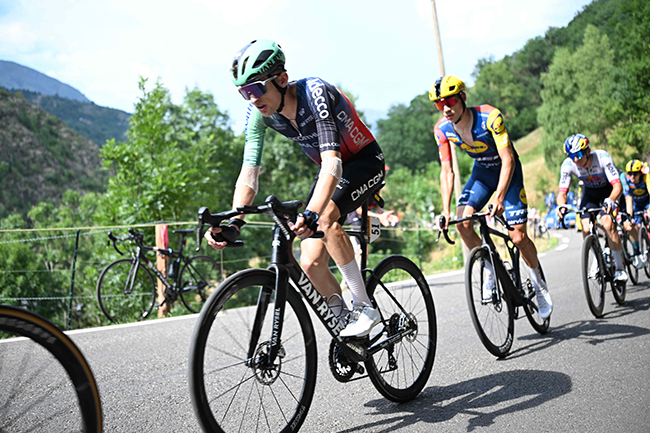
Paul Seixas racing in stage six. Sirotti photo
18) Isaac del Toro. What an exceptional 22-year-old rider. So much joie de vivre on the bike. Like Captain Pogacar, he just loves to race his bike. You can see it on his face. When Isaac is going well, his face lights up. To have such talent, and to ride at the wing of one of the two greatest riders of all time as your mentor? Third place in Paris in your first Tour de France? Yes, please. First Mexican to win the Tour de France? Looks that way.
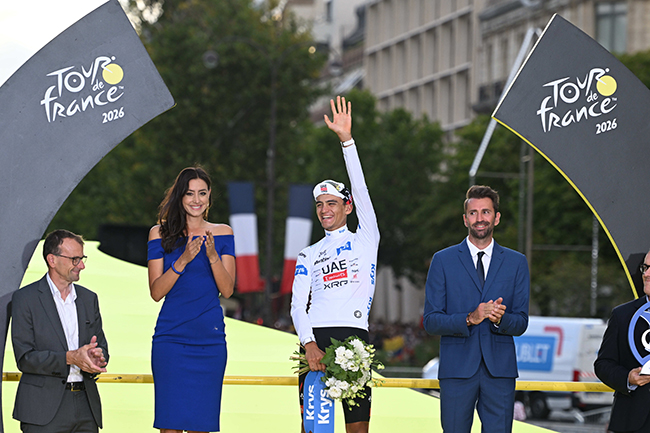
Isaac del Toro in his well-earned white jersey after the final stage. Sirotti photo
19) The future of the sport is so bright, we all better wear shades. Look through the overall GC. Isaac del Toro (UAE Team Emirates-XRG) finished 3rd overall and won the final White Jersey. Paul Seixas (Decathlon CMA CGM Team) finished 4th overall. Lenny Martinez (Bahrain Victorious) finished 5th overall. Juan Ayuso (Lidl-Trek) finished 7th overall. Davide Piganzoli (Team Visma | Lease a Bike) finished 14th overall. Yes, they are all under 25. The final top 10 was dominated by these young athletes, capturing 4 out of the top 7 spots behind veterans Tadej Pogačar and Remco Evenepoel (age 26).
20) This year’s parcours was extraordinary. The Pyrenees, the Massif Central, the Vosges, the Alps, the cobbled Côte de la Butte climb in Montmartre, which climbs the famous Rue Lepic. The Team Time Trial. The perfect challenge of the stage 16, the July 21st individual time trial. There is no greater arena in all of sport (although I have to shout out alpine skiing’s downhill of the Hahnenkahm in Kitzbuhel) and this year’s course gave the riders the perfect stage for their talents.
21) Quinn Simmons, the best teammate. He was one of the most animated of all the race’s key animators. The high fives to fans along the route, the wild hair on his face and his head, his willingness to lay everything on the line; I was truly disappointed that he didn’t win a stage. If you want to take him to task for his politics (and I am decidedly not a fan), well, I would advise you to vet out all the other riders as well before you throw shade.
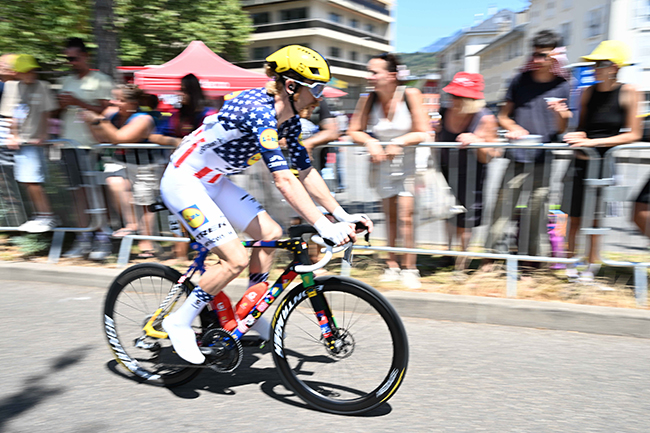
Quinn Simmons heads to the start of stage 17. Sirotti photo
22) GC Kuss. aka Seppy. And Victor Campanaerts. And Matteo Jorgenson. If you didn’t watch the daily vlogs that Victor posted, go view them right now. They are hilarious, and thoughtful, and a look inside the team bus that few have ever given us. Don’t sleep on the RaceTV videos from EF Education-EasyPost. They are also brilliantly done. Watch them all, we’re all suffering from PTWS (post-Tour Withdrawal Syndrome).
Content continues below the ads
23) Montmartre, don’t change a hair for me. When I began following the Tour in the early 1980s, the Tour was firmly ensconced in their sprint finish on the Champs-Élysées Paris. In 1975, they created a fine finish to the Tour, one last chance for the sprinters. There were a handful of exceptions, notable (for me, a guy from Michigan) when MSU grad and Detroit native Jeff Pierce soloed to victory for 7-11 in the 1987 Tour. Ah, but Montmartre: the climbs, cobbles, the romance of Le Mons Martis—the Mountain of Mars, a 2,000-year-old settlement that grew into a Bohemian wonderland. Not only the romance, but the new finish turns the final stage into a real race. You saw it on Sunday – has an athlete ever buried themselves any deeper than Mathieu van der Poel did to hold off the peloton by half a wheel and claim his second stage win of the Tour? That’s also a no.
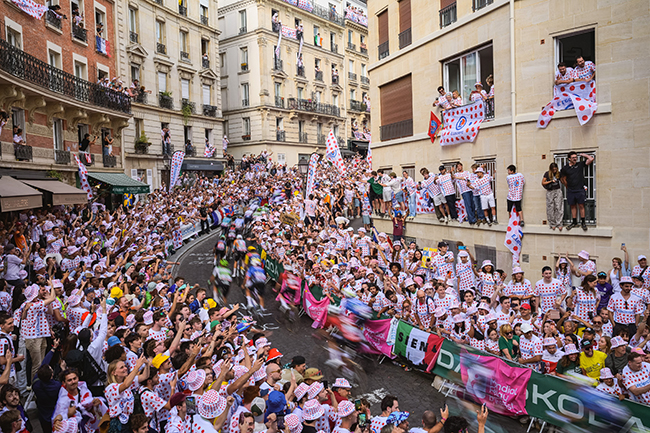
The peloton races up the Montmartre climb in stage 21.
24) Tadej Pogacar. An athlete at the absolute peak of his game, in one of the world’s toughest sports. Michael Jordan, from 1988–1993 was the same. You knew MJ would win, you just didn’t know how. F1 with Hamilton and Schumacher and Verstappen at their peaks. No one could beat them. No one came close. Mikaela Shiffrin this past season: the single greatest ski racer of all time. Muhammad Ali from 1964–1967. That is what are now privileged to see with Tadej Pogacar. A meteor across the sky of bike racing. We may see greater things next year. We may find that the flame is out. But over these past two seasons, and this Tour de France in particular, no one has ever take over the country of France throughout the whole of July and made it his own playground. No one. Enjoy this one, fans, it was Ausgezeichnet! Incroyable! Straordinario!
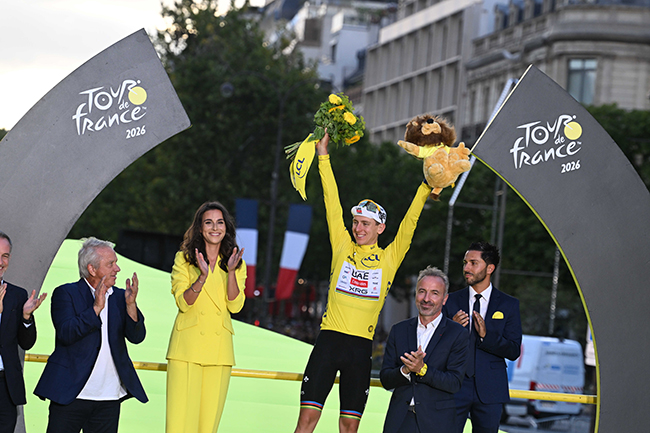
That's five Tours de France for Tadej Pogacar. Sirotti photo
25) The Men’s Tour de France, I bid you adieu until next year. I will be ready to be captivated for the forty-seventh time next summer. And I look forward with equal joy to the ensuing battle between Demi Vollering and Pauline Ferrand-Prévot as the Tour de France Femmes avec Zwift starts in 5 days. It will give us another nine days of thrilling action as the women’s peloton roars out of Lausanne on Saturday, August 1 to Nice on Sunday, August 9. Vive Le Tour! Vive La France!
• Chapeau to my son Aaron Stanley for many of the fun facts herein.
Citations:
1. https://onlinelibrary.wiley.com/doi/full/10.1111/sms.14243
2. https://pmc.ncbi.nlm.nih.gov/articles/PMC12580164/
3.https://www.academia.edu/17056498/Systematic-Review-The-Effects-of-Growth-Hormone-on-Athletic
4. https://www.usada.org/spirit-of-sport/aicar-and-other-prohibited-amp-activated-protein-kinase-activators/
David Stanley, like nearly all of us, has spent his life working and playing outdoors. He got a case of Melanoma as a result. Here's his telling of his beating that disease. And when you go out, please put on sunscreen.